
Arecaceae [TOP]

is a botanical family of perennial, flowering plants in the monocot order Arecales, commonly known as palms or palm trees . This family is exceptionally diverse, comprising approximately 181 genera and roughly 2,600 species . While primarily associated with tropical and subtropical climates, various species are found in habitats ranging from rainforests to deserts across the globe. Key Characteristics

: Typically large, evergreen, and compound, leaves are often arranged in a terminal crown atop an unbranched stem. Common shapes include palmate (fan-shaped) and pinnate (feather-shaped). arecaceae

: They generally produce small, 3-merous flowers that may be unisexual or bisexual. Fruits are usually drupes (like coconuts) or berries. is a botanical family of perennial, flowering plants

: Palms can appear as tall trees, understory shrubs, woody climbers (vines), or stemless plants. Fruits are usually drupes (like coconuts) or berries
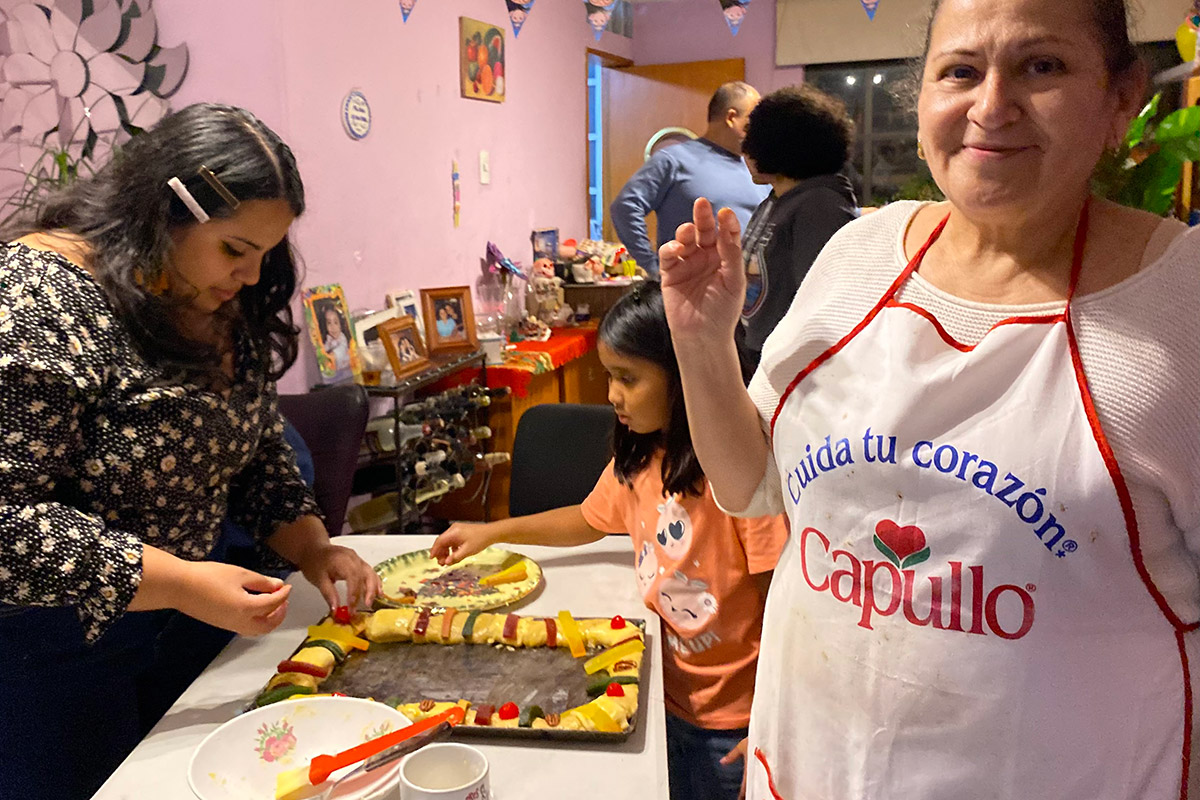
In the foreground, a woman wearing a white apron with a Spanish-language slogan smiles at the camera. Behind her, a young woman and young girl places strips of brightly colored fruit candy and nuts on top of a rectangular ring cake.

Dani and I decorate the Rosca de Reyes while my Tía Laura smiles.

Photo by Tomí García Téllez

is a botanical family of perennial, flowering plants in the monocot order Arecales, commonly known as palms or palm trees . This family is exceptionally diverse, comprising approximately 181 genera and roughly 2,600 species . While primarily associated with tropical and subtropical climates, various species are found in habitats ranging from rainforests to deserts across the globe. Key Characteristics

: Typically large, evergreen, and compound, leaves are often arranged in a terminal crown atop an unbranched stem. Common shapes include palmate (fan-shaped) and pinnate (feather-shaped).

: They generally produce small, 3-merous flowers that may be unisexual or bisexual. Fruits are usually drupes (like coconuts) or berries.

: Palms can appear as tall trees, understory shrubs, woody climbers (vines), or stemless plants.


Support the Folklife Festival, Smithsonian Folkways Recordings, Cultural Vitality Program, educational outreach, and more.

.