


Released during the height of the Fugees' The Score era, the remix capitalized on the group's meteoric rise. It served as a bridge between two "outsider" groups: Cypress Hill, who represented the Latin-American stoner-noir aesthetic, and the Fugees, who championed the Haitian-American immigrant experience. Together, they showcased a unified front against a mainstream industry that often attempted to pigeonhole minority artists.

This paper explores the collaborative synergy between Cypress Hill and the Fugees in the "Boom Biddy Bye Bye" remix (1996). By examining the track’s production, lyrical themes, and its placement within the mid-90s "Golden Era" of hip-hop, this analysis highlights how the remix bridged the gap between West Coast cannabis-centric funk and East Coast refugee-informed soul. The paper argues that the remix serves as a testament to the era’s creative fluidity and the political undercurrents of hip-hop’s most influential collectives.

The original production by DJ Muggs utilized heavy basslines and eerie atmospheric samples to create a sense of claustrophobia. In contrast, the Fugees—led by production—stripped back the industrial grime. The remix introduced a mid-tempo, soulful groove punctuated by a steady drum break and ethereal keyboard chords. This shift shifted the listener's focus from the visceral aggression of the street to a more reflective, almost somber perspective. Lyrical Convergence: The Refugee Meets the Temples of Boom

The inclusion of the Fugees allowed Cypress Hill to tap into the "Refugee Camp" aesthetic—a mix of Caribbean influences and urban storytelling. This collaboration helped humanize the "Boom Biddy Bye Bye" refrain (a euphemism for gunfire), reframing it as a cycle of violence that affects the entire community rather than just a boastful threat. Cultural Context and Legacy

The "Boom Biddy Bye Bye (Fugees Remix)" is more than a commercial rework; it is a sonic artifact that captures a moment when hip-hop was both expanding its sound and deepening its message. By marrying the ominous energy of Cypress Hill with the harmonic intellect of the Fugees, the track remains a masterclass in how remixes can redefine a song's soul while maintaining its original edge.

Boom Biddy Bye Bye (fugees Remix) May 2026

Released during the height of the Fugees' The Score era, the remix capitalized on the group's meteoric rise. It served as a bridge between two "outsider" groups: Cypress Hill, who represented the Latin-American stoner-noir aesthetic, and the Fugees, who championed the Haitian-American immigrant experience. Together, they showcased a unified front against a mainstream industry that often attempted to pigeonhole minority artists.

This paper explores the collaborative synergy between Cypress Hill and the Fugees in the "Boom Biddy Bye Bye" remix (1996). By examining the track’s production, lyrical themes, and its placement within the mid-90s "Golden Era" of hip-hop, this analysis highlights how the remix bridged the gap between West Coast cannabis-centric funk and East Coast refugee-informed soul. The paper argues that the remix serves as a testament to the era’s creative fluidity and the political undercurrents of hip-hop’s most influential collectives. Boom Biddy Bye Bye (Fugees Remix)

The original production by DJ Muggs utilized heavy basslines and eerie atmospheric samples to create a sense of claustrophobia. In contrast, the Fugees—led by production—stripped back the industrial grime. The remix introduced a mid-tempo, soulful groove punctuated by a steady drum break and ethereal keyboard chords. This shift shifted the listener's focus from the visceral aggression of the street to a more reflective, almost somber perspective. Lyrical Convergence: The Refugee Meets the Temples of Boom Released during the height of the Fugees' The

The inclusion of the Fugees allowed Cypress Hill to tap into the "Refugee Camp" aesthetic—a mix of Caribbean influences and urban storytelling. This collaboration helped humanize the "Boom Biddy Bye Bye" refrain (a euphemism for gunfire), reframing it as a cycle of violence that affects the entire community rather than just a boastful threat. Cultural Context and Legacy The original production by DJ Muggs utilized heavy

The "Boom Biddy Bye Bye (Fugees Remix)" is more than a commercial rework; it is a sonic artifact that captures a moment when hip-hop was both expanding its sound and deepening its message. By marrying the ominous energy of Cypress Hill with the harmonic intellect of the Fugees, the track remains a masterclass in how remixes can redefine a song's soul while maintaining its original edge.

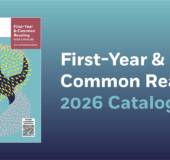
2026 Catalog for First-Year & Common Reading

We are delighted to present our new First-Year & Common Reading Catalog for 2026! From award-winning fiction, poetry, memoir, and biography to new books about the environment, current events, history, public health, science, social justice, student success, and technology, the titles presented in our common reading catalog will have students not only eagerly flipping through

Read more