
The Anatomy of Suspense: The Power of Police Procedurals and Thrillers

Whether it is the methodical investigation of a crime scene or the heart-pounding escape from a predator, the policier and thriller remain cornerstones of storytelling. They remind us that while the world can be a dark and unpredictable place, there is always a drive—be it through law or sheer survival instinct—to bring the truth into the light.

The policier is rooted in the "how." It focuses on the methodology of justice—the forensic details, the gritty teamwork, and the slow accumulation of evidence. Its protagonist is typically a professional, often flawed but bound by a code of conduct or law. The satisfaction of a policier comes from watching the restoration of social order; we see a world broken by a crime and feel a sense of relief as the detective’s logic mends it. It is a genre of patience and observation. The Thriller: Survival on the Edge

The genres of the (police procedural) and the thriller are two sides of the same coin, obsessed with the disruption of order and the quest for resolution. While they often overlap, their appeal lies in how they uniquely manipulate tension, morality, and the human psyche. The Policier: Order from Chaos

In contrast, the thriller is defined by the "what next?" It is less about the past (solving a crime) and more about the future (preventing a catastrophe). In a thriller, the protagonist is often in immediate danger, and the stakes are frequently life-or-death. Whether it is a psychological thriller or a political one, the pulse of the story is driven by a race against time. If the policier is a chess match, the thriller is a high-speed chase. The Intersection: Why We Watch

What unites these genres is their exploration of the "shadow self." They allow audiences to confront their deepest fears—violence, betrayal, and injustice—from the safety of a chair. By placing characters in extreme situations, these stories reveal fundamental truths about human nature: how we react under pressure and what we are willing to sacrifice for the truth. Conclusion

WELCOME TO THE CHEAP BEATS

Policier, Thriller 99%

The Anatomy of Suspense: The Power of Police Procedurals and Thrillers

Whether it is the methodical investigation of a crime scene or the heart-pounding escape from a predator, the policier and thriller remain cornerstones of storytelling. They remind us that while the world can be a dark and unpredictable place, there is always a drive—be it through law or sheer survival instinct—to bring the truth into the light. Policier, Thriller

The policier is rooted in the "how." It focuses on the methodology of justice—the forensic details, the gritty teamwork, and the slow accumulation of evidence. Its protagonist is typically a professional, often flawed but bound by a code of conduct or law. The satisfaction of a policier comes from watching the restoration of social order; we see a world broken by a crime and feel a sense of relief as the detective’s logic mends it. It is a genre of patience and observation. The Thriller: Survival on the Edge The Anatomy of Suspense: The Power of Police

The genres of the (police procedural) and the thriller are two sides of the same coin, obsessed with the disruption of order and the quest for resolution. While they often overlap, their appeal lies in how they uniquely manipulate tension, morality, and the human psyche. The Policier: Order from Chaos Its protagonist is typically a professional, often flawed

In contrast, the thriller is defined by the "what next?" It is less about the past (solving a crime) and more about the future (preventing a catastrophe). In a thriller, the protagonist is often in immediate danger, and the stakes are frequently life-or-death. Whether it is a psychological thriller or a political one, the pulse of the story is driven by a race against time. If the policier is a chess match, the thriller is a high-speed chase. The Intersection: Why We Watch

What unites these genres is their exploration of the "shadow self." They allow audiences to confront their deepest fears—violence, betrayal, and injustice—from the safety of a chair. By placing characters in extreme situations, these stories reveal fundamental truths about human nature: how we react under pressure and what we are willing to sacrifice for the truth. Conclusion

GONE WITH THE WIND – BUT FOUND

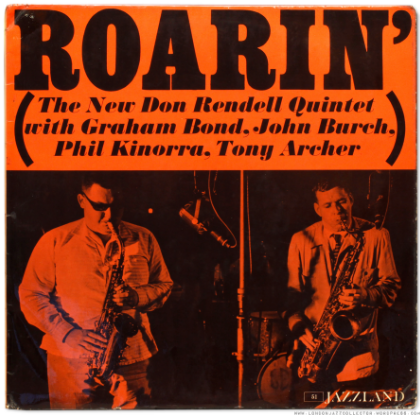
One of the problems of running The Rare Record Club is the ones that got away. One of my greatest ambitions was to put the classic Rendell-Carr Quintet albums Shades Of Blue and Dusk Fire back onto the black stuff. Sadly, this was thwarted by the company that owns this material declining to license them. As many readers will know, these albums issu…

PSYCHAMERIICA PARTT 2

The influence of hallucinogenic drugs had begun to be felt in ultra-hip musical circles from the start of the 60s, but it wasn’t until 1965 that it became explicit. Future Doors drummer John Densmore (see interview, page 54) joined a band named The Psychedelic Rangers that spring, ubiquitous Hollywood scenester Kim Fowley released his The Tri…

Luke Haines

As a younger fellow, I used to quite like the idea of subversion and (hushed tone) transgression in pop music. These days I’m not so bothered. I’m not sure that pop music has ever been particularly subversive. Has it ever had a corrupting effect, though? Yep. As a lower middle-class dweller (old skool class definitions here only) I am happy to …

Policier, Thriller
Diamond Publishing Ltd., 7th Floor, Vantage London, Great West Road, Brentford, TW8 9AG.
Registered in England. Company No. 04611236